by Cameron | May 12, 2024 | Podcast, Premium
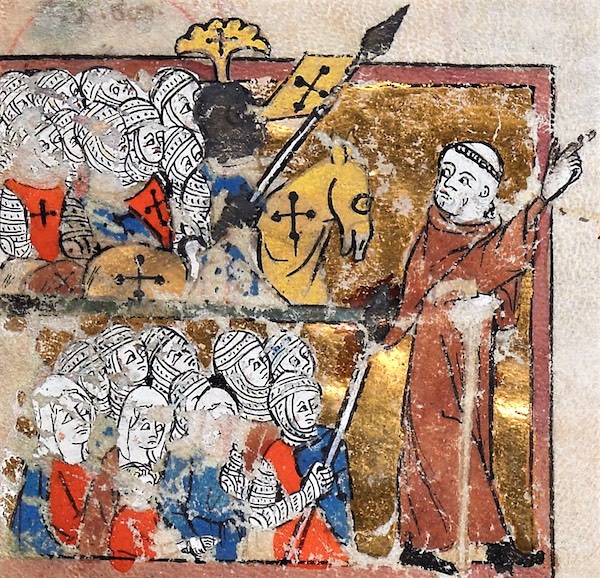
Ten years after the death of Muhammad in 632, the political and religious map of the Mediterranean and the Near East had been completely rewritten. The great prize was Jerusalem, captured in February of 638. For most of the next 450 years, the Muslims treated the Christians and Jews in their empire very well. So what lead to the First Crusade in the late 11th century?
by Cameron | Apr 28, 2024 | Podcast, Premium
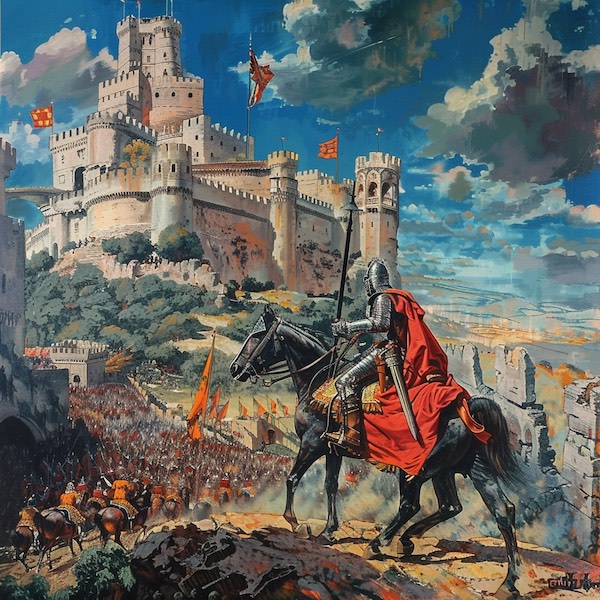
The next major milestones of the Reconquista were the Granada massacre (1066) and the Fall of Toledo (1085). Both took part in a wider battle between the Christian and Muslim forces in Spain, and introduce us to the famous Spanish hero El Cid, who fought for both sides.
by Cameron | Apr 14, 2024 | Podcast, Premium
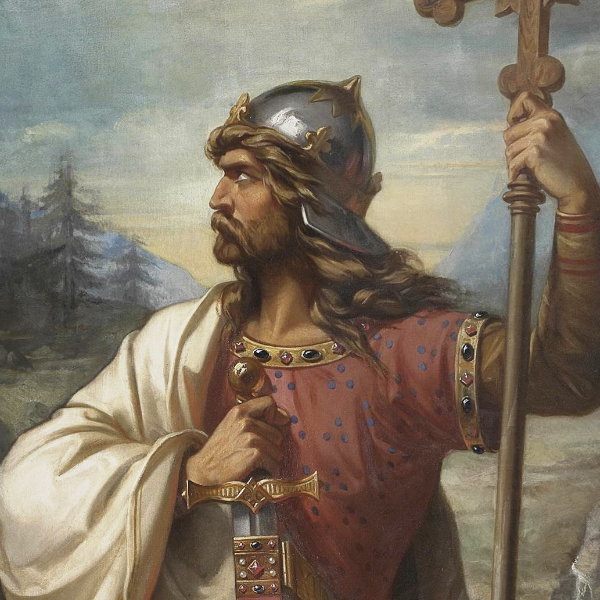
The high point of the Muslim conquest of Spain was The Caliphate of Córdoba, established in the late 10th century by Abd al-Rahman III, who declared himself Caliph in 929. Muslims, Christians, and Jews lived together mostly in a climate of harmony and religious tolerance. The Caliphate was weakened over time by internal conflicts and disputes over succession, which led to civil wars and the breaking up of the Caliphate into many smaller individual kingdoms. They were prey for the larger and more powerful Christian kingdoms who longed to recapture the former Visigoth Spanish territories. But the exact starting point of the Reconquista is often identified with the much-earlier Battle of Covadonga, which took place around 722 CE.

by Cameron | Mar 18, 2024 | Podcast, Premium
One of the most important scholars that al-Mamun employed at the House of Wisdom was Muhammad ibn Musa al-Khwari’zmi, the most famous Arabic mathematician and scientist. He was instrumental in introducing the Arabs to the Hindu numerals, carried out important work in geography, but his greatest legacy, of course, is his extraordinary book on Algebra. The Latinized version of his name is Algorithm. It’s hard to imagine advanced mathematics or science without algebra and algorithms.

by Cameron | Mar 11, 2024 | Podcast, Premium
In the West, we have all heard about the great Library of Alexandria. But how many are familiar with the fact that Caliph Al-Mamun built one of the world’s greatest libraries in 9th century Baghdad, the “House of Wisdom”? And how many of us have heard of the Library of Nineveh, modern-day Mosul, Iraq, built by King Ashurbanipal about 650 BCE which supposedly contained more than 20,000 clay tablets written on with cuneiform text? It was discovered in the 1840s. H. G. Wells called the library “the most precious source of historical material in the world.” Among other things, it contained the Epic of Gilgamesh.

by Cameron | Feb 25, 2024 | Podcast, Premium
We delve into the distinction between chemistry and alchemy and ask where is the line in the sand that divides the two? Isaac Newton, after all, was a devoted alchemist and yet we consider him a great scientist. We also talk about the guy who came after Jabir, Abu Bakr Muhammad ibn Zakiria al-Razi who lived from 854 to 925 known in the west as Rhazes. One of his greatest achievements in chemistry was his classification scheme and his legacy is vast.

 You can subscribe to the free episodes with the below links. To subscribe to the premium episodes, please